Eastleigh Building Collapse: Engineering Challenges in Rescue Operations
Explore the engineering challenges of the Eastleigh building collapse, including pancake failure, rescue access, building setbacks, infrastructure and structural safety.
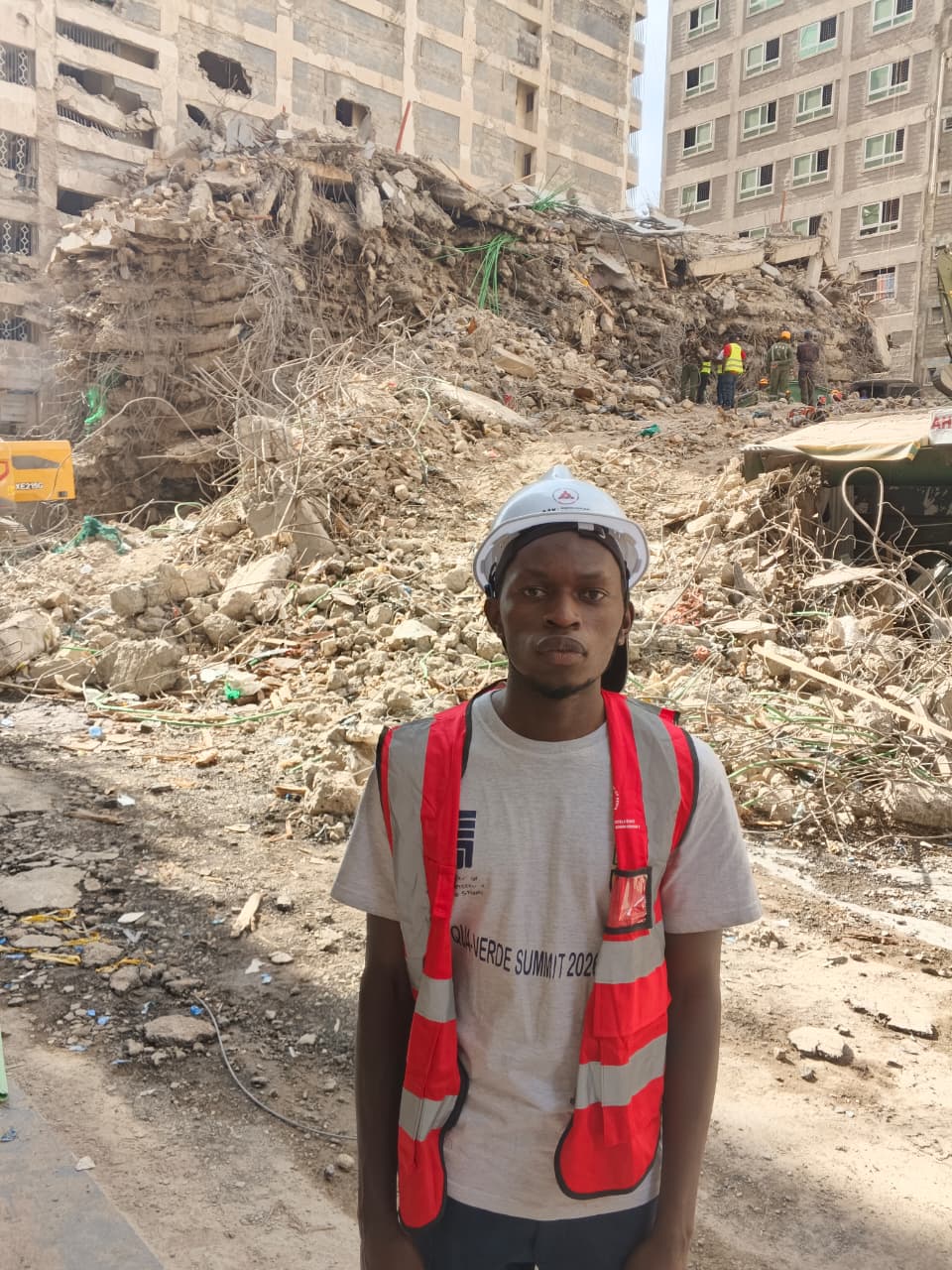
The Engineering Challenges of Rescue Operations at a Building Collapse Site: Eastleigh
Following the collapse of an 18-storey building in Eastleigh, while representing the AAK Engineers' Chapter, I visited the scene of the collapse. During the visit, I learnt a lot from an engineering perspective. Here are the lessons and deductions made.

How evacuations became possible
The building suffered a pancake collapse that was triggered by the failure of a corner column at the ground floor. All columns at the ground floor and upper floors followed promptly. The collapse was quite systemic and mostly vertical, with little lateral displacement.

The basement floor, however, didn't collapse, with columns on the basement floor reported to be still standing. My deduction is that columns transmit axial loads and moments to the foundation. On the ground floor and other floors, all axial loads are transmitted purely by columns, as this was a frame structure. However, on the basement floor, there were some retaining walls and other reinforced concrete walls due to the soil conditions below the ground level. These walls were mainly designed to resist lateral earth pressures. But given the stiffness, they also transmitted some axial loads to the foundation.
This means that the total axial load being transmitted by columns to the foundations was partially shared by the retaining walls in the basement floor. Given the reduced axial loads, columns in the basement floor didn't fail due to axial loads, unlike those in the ground floor. This phenomenon gave the rescuers an access route to the basement floor where most victims were trapped.


Regardless of this, other challenges were exhibited on site.
Why setbacks are crucial
Setbacks are the unbuilt-up space between the building and the plot's perimeter. However, in Eastleigh and other parts of Nairobi, it has been normalized to build without adequate setbacks. Most people resort to building beacon to beacon. This posed a challenge to the rescuers when it came to material haulage from the site. There was barely enough space to allow for multiple trucks and other emergency vehicles to access the site and continue with operations. This therefore slowed down rescue operations.
Industry insights, monthly

Importance of civil works in emergencies
While on site, sewer lines burst and started leaking. It is during this time that interdisciplinary collaboration became very important. Teams from Nairobi City Water and Sewerage Company were called on site to block the sewer lines, as they were directing the sewer to the basement floor where the victims were trapped. Luckily, the sewer lines were blocked early enough to allow for rescue operations to continue. It became clear to me how civil infrastructure should be designed to be resilient enough even when the unexpected happens.

Role of engineers in the rescue operations
The disaster management team relied on engineers to help the teams on site understand the structural and architectural designs of the building. The designs were used to guide the rescuers on how to approach the rescue operations systematically.

The engineers on site were also responsible for ensuring that the rescue operations didn't cause further harm by giving the rescuers the safest path to access the basement. The excavators on site were to facilitate material haulage without causing further damage that could hinder the rescue operations. The engineers therefore guided the site teams to ensure the safety of the rescue operations.

Personal Protective Equipment (PPE)
Construction sites are one of the most hazardous working environments. However, a collapse site is a level higher. Standing by the rubble of the collapse site next to an excavator, I could notice my heart pounding harder and harder. For this visit, I ensured I was fully kitted with my PPE: helmet, reflector, safety boots. Luckily, I also happened to have accident cover for any accidents while working.
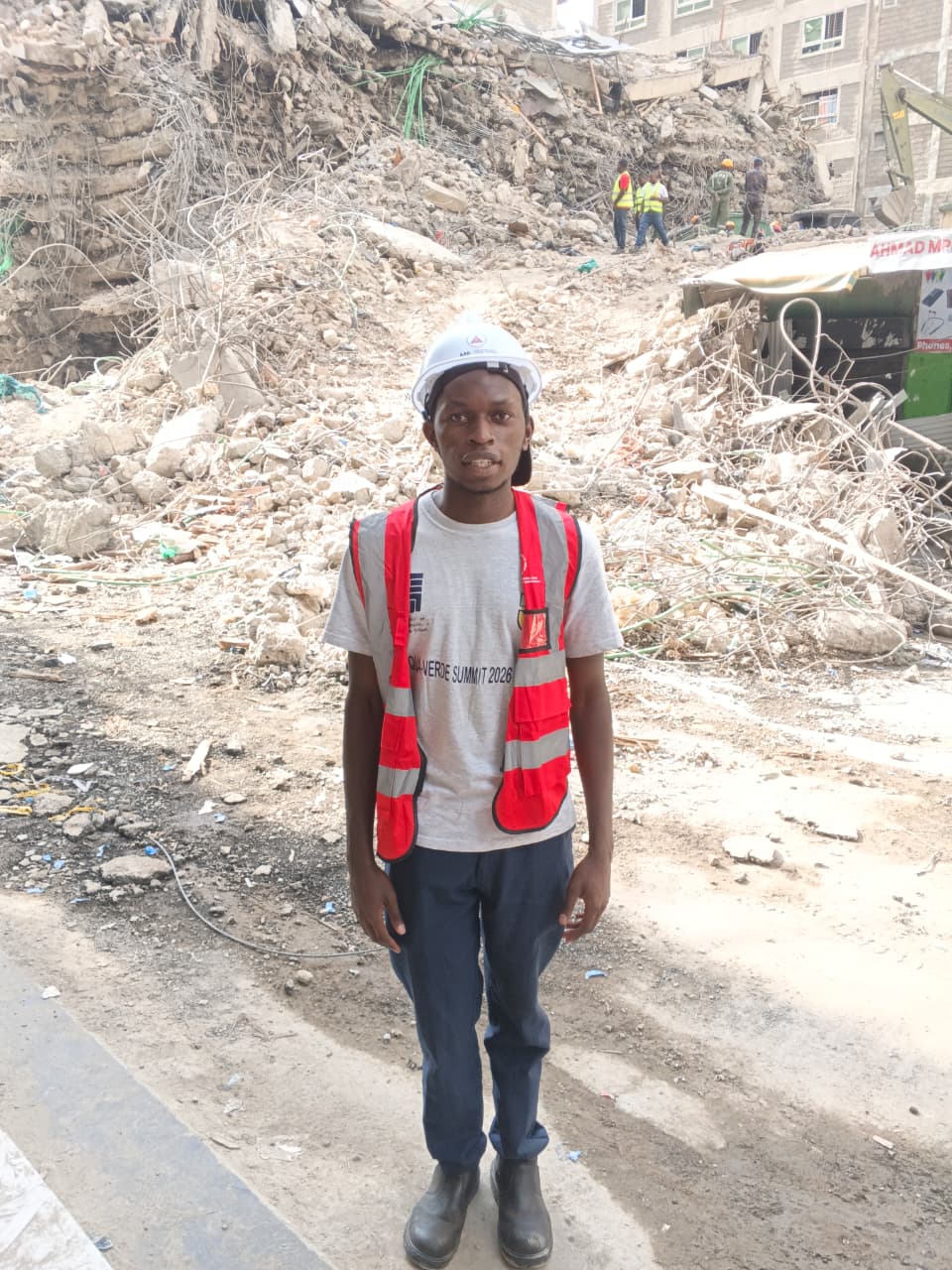
Regardless of my own preparation, it was unsightly seeing people in suits, normal shoes, and some without helmets.

Conclusion
This is the fourth collapse site I have visited. Visiting collapse sites usually comes with an eerie feeling that reminds me how my mistakes could lead to loss of lives, livelihoods, and property. It is always a wake-up call to ensure professionalism and integrity in all my engagements.

About the Author
El-Bethel Buyanzi is a fifth-year Civil Engineering student at the Technical University of Kenya and the President of the Association of Engineering, Construction and Architecture Students (AECAS-TUK). He has a keen interest in the built environment, engineering, leadership, and professional development. Through his writing, he documents his experiences, lessons, and observations as he prepares for a career in the built environment, while exploring the intersection of engineering practice, professional development, and leadership.
To learn more about the author, visit his about page or subscribe to his newsletter.
Industry insights, monthly
Enjoyed this article?
Read more articles