The Seven Rules of Real Estate Investment by Nashon Okowa: A Book Review
A review of Nashon Okowa’s The Seven Rules of Real Estate Investment, covering ROI, feasibility studies, due diligence, location, marketing and project management.
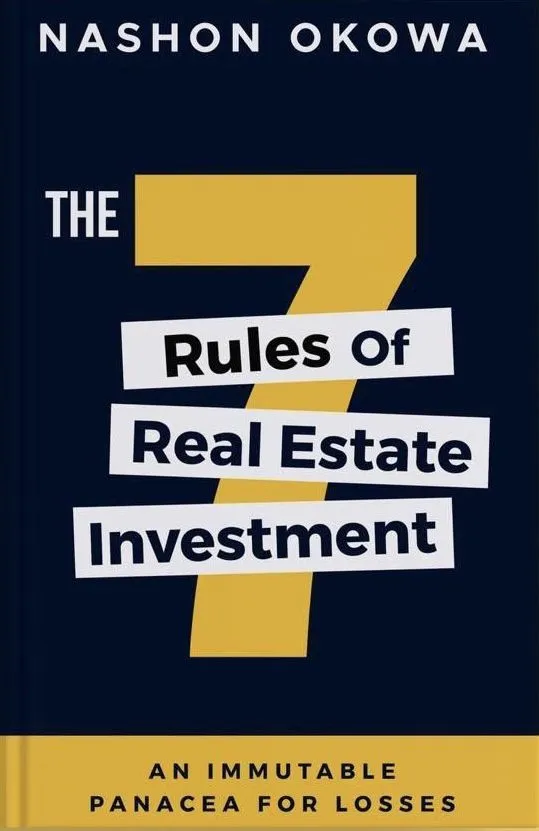
Nashon Okowa: The Seven Rules of Real Estate Investments — A Book Review
By El-Bethel Buyanzi
Opening
Nairobi's skyline continues to populate with upcoming apartments, day in, day out, from east to West, and South to north. This rise of real estate developments led me to research what the rules of real estate investment really are. This was in the quest to understand what ensures the profitability of a real estate investment.
It is not uncommon to see failed real estate investments, some failing in the greatest ways, such as the collapse of buildings, or others failing in less obvious ways, such as the auctioning of the properties, or rather just breaking even without great profits, enough to sustain the business.
It is the risky nature of the real estate industry that led me to study more about the real estate industry from Nashon Okowa's book, The Seven Rules of Real Estate Investments.
About the Book
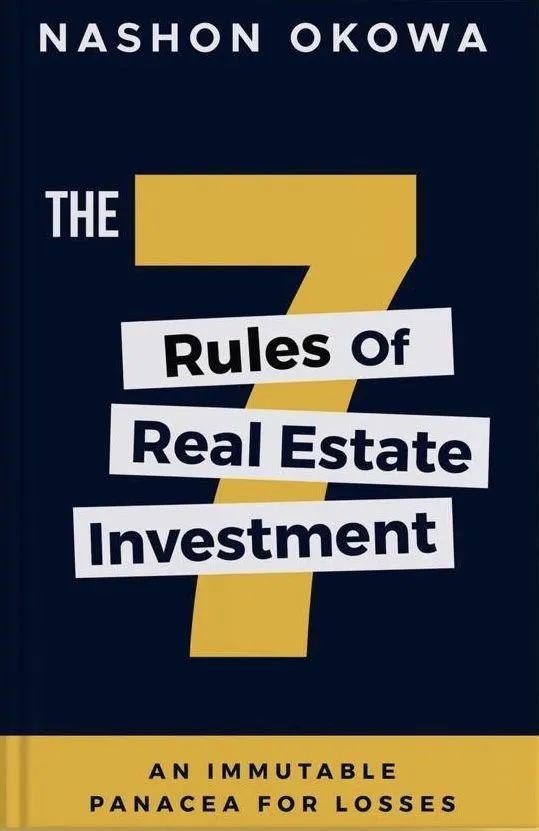
| Title | The 7 Rules of Real Estate Investment |
| Author | Nashon Okowa |
| Pages | 106 |
| Genre | Non-fiction — Real Estate Investment and Personal Finance |
| My Rating | 4.8/5 |
What the Book Is About
The book is mainly written for investors who seek to protect their money while investing in real estate. The writer is a Kenyan construction project manager with experience in overseeing multiple construction projects. The author acknowledges the perception of people on real estate investment, in that a lot of people consider real estate a lousy venture.
What has caused this perception of the real estate industry is that a lot of people invest based on hearsay without actually researching the market. Apart from this, there has been commoditization of the real estate industry, which has led to the differentiation of real estate based on cost alone.
The Central Ideas
As per the title of the book, there are seven rules of real estate investments:
- Never Ignore Feasibility Study
- Set Your Expected Return On Investment
- Be Ruthless with Due Diligence
- Never Compromise on Location - Never, Never
- Sell The Sizzling, Sell the Steak
- Leverage On Reputable and Experienced Project Team
- Professionalise Management of Projects
The rules that really interested me are rules 2 and 5. The author went into detail on how to calculate the return on investment and how to judge the quality of an investment based on its rate of return. The author recommends that good real estate investments give you a minimum annualized rate of return of 15%. However, for rentals, any ideal piece of real estate should earn you, at least, an annual gross rent of 10% of its cost or value.
On rule 5, the author notes that most people sell the sizzling, which may be considered as the commonly marketed renders advertised online and even in traditional marketing avenues. He therefore advises real estate investors to do the marketing differently. The author advises against having more marketing meetings than actual site meetings. Given that we are in a buyer's market, we can't afford to compete based on cost alone or be the same as the masses. We should sell the sizzling and also sell the steak. I leave this up to you to go and read the book and find out what the author actually means by this.
The other rules definitely had more lessons, but these two rules were the most educational for me.
What the Author Does Well
The author breaks down complex built environmental concepts into simpler to read concepts that are also easy to understand and follow. The book is engaging enough to allow you to read it in one sitting. The author addresses what we see daily, either in the newspapers or in our daily lives. This makes the book highly relatable and also educational while being interesting to read.
Where the Book Falls Short
The book's target audience is investors seeking to invest in the real estate industry, specifically in Kenya. It is for this reason that some professionals in the real estate industry might find the contents of the book slightly obvious, which begs the question, why isn't everyone profitable? However, if it is your first book in real estate, like it was for me, you will find it extremely educational.
What I Took from the Book
I learnt that you should approach real estate investment with utmost professionalism, due diligence, and a good understanding of the market. I also learnt about the importance of time management and the profitability of real estate investment. You therefore need to find a professional who can help you estimate the time the project will take accurately and, if possible, reduce it.
Who Should Read It?
Anyone seeking to invest in the real estate industry should definitely read this book. Budding professionals in the real estate industry can also learn a great deal from the book. Finally, anyone in the built environment who has a challenge with reading and seeks to start reading should start with this book, as it is a simple-to-read book and will motivate you to read even more complex literature at the start of your reading journey.
Verdict
I will give the book a rating of 4.8 out of 5. It is well-written, accurate, and industry-relevant. Investors who abide by the rules in the book are definitely advantaged over those who don't.
About El-Bethel Buyanzi
El-Bethel Buyanzi is a Civil Engineering student at the Technical University of Kenya with an interest in the built environment, engineering, leadership, and professional development. He writes about his experiences, lessons, and observations as he prepares for a career in the built environment.
To learn more about the author, visit his about page or subscribe to his newsletter.
Enjoyed this article?
Read more articles